


Built-In Bookcases: Design Rules That Keep Them From Looking Heavy in Small Rooms
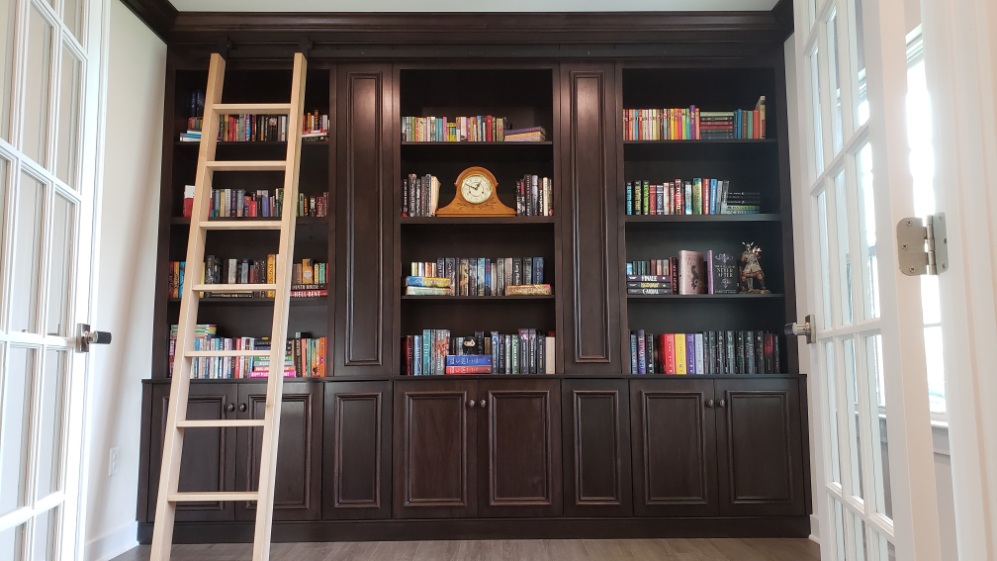
Smart design turns built-ins from bulky to beautiful. If your bungalow in Belmont, condo near the Downtown Mall, or cottage in Fry’s Spring feels tight, the right sizing and details can make shelves look lighter and your room feel bigger. This guide covers the depth, height, lighting, and trim choices our clients ask about most, and how custom built-in bookcases can be tailored for small Charlottesville spaces without overpowering them.
Built-In Bookcases Design Rules For Charlottesville Homes
Older Charlottesville houses often have modest rooms and 8 to 9 foot ceilings. Even newer townhomes in neighborhoods like 5th Street Station can have compact living areas. To keep visual weight down, think in terms of balance: slimmer depths, lighter trim, and calm lighting. When each choice supports the others, the whole wall reads as airy instead of massive.
Right Proportions For Small Rooms
Proportion is your best tool against a bulky look. Depth, height, and shelf thickness work together. When they are scaled to the room, your eye reads order and space, not clutter.
- Depth: For general books, 9 to 10 inches is often enough. Reserve 11 to 12 inches only if you display art books or bins.
- Height: Stop 2 to 4 inches below the ceiling for a shadow line or use a modest crown to meet the ceiling without feeling top-heavy.
- Shelf thickness: Aim for a clean 3/4 inch to 1 inch profile. Thicker shelves can look chunky in tight rooms.
- Toe kick: A 3 to 4 inch recessed toe kick lets the case float and keeps the front face from feeling like a wall of wood.
In North Downtown rooms with narrow footprints, a 9 inch interior depth with a thin face frame often reads crisp. In Ivy or Crozet homes with larger rooms, you can step up depth a notch, but keep shelf lines slim so the piece still feels light.
Balancing Height, Depth, And Visual Weight
Visual weight comes from mass and from contrast. Tall, dark, and deeply built shelves add weight fast. To lighten the look in a small living room or home office, reduce one or more of those factors. Lighter paint, careful lighting, and open sections can offset the height you need for storage.
Break the span. Continuous doors from floor to ceiling can feel like a closet. Open shelves above with discreet doors or drawers below keep storage practical while the top half stays airy. If you flank a fireplace in a Locust Avenue living room, match mantel height with the first pair of shelves to create a calm horizon line.
Lighting For Built-Ins That Feels Soft
Charlottesville’s short winter days make shelf lighting useful, but harsh points of light add visual weight. Choose warmer color temperature and indirect placement so the case glows rather than glares.
- Use warm white LEDs around 2700K to 3000K for a comfortable evening tone.
- Hide strips or pucks so you see lit objects, not the fixture. Aim light toward the back or underside of the shelf.
- Add a dimmer. Low output at night keeps the wall from dominating the room.
In compact UVA-area rentals or carriage houses, a single ribbon above the top shelf often does more than multiple bright pucks. Keep wires concealed and transformers accessible for service so the look stays clean over time.
Trim Details That Keep The Look Light
Trim is where many projects get heavy. Overly wide stiles, deep crowns, and layered moldings make a small wall feel crowded. Choose simpler shapes and slimmer widths to hold the design together without shouting.
Good starting points:
- Face frame stiles and rails at 1 to 1.25 inches keep lines crisp without feeling flimsy.
- Choose a single, medium crown or a small cove at the top. Stacked crowns add too much mass in short rooms.
- Inset doors with slim shaker rails read clean and flat. Large applied moldings push into the room visually.
If your home already has traditional casing, echo the profile once rather than layering new pieces. Repeating one simple detail ties the built-in to the room while keeping the overall form calm.
Color, Finish, And Back Panel Choices
Color is a lever for visual weight. Dark tones can be beautiful, but in small rooms they act like solid blocks. Lighter paints, natural clear finishes, or a painted interior back panel that matches the wall color lighten the read.
A few approaches that work well in tight spaces:
Match-to-wall paint: Painting the bookcase the same color as the walls makes edges recede. The shelves feel integrated instead of separate.
Light wood grain: Rift white oak with a matte finish keeps pattern gentle and helps the wall feel wider.
Subtle back detail: Beadboard or a flat panel adds texture without depth. Avoid busy patterns that crowd the eye.
Smart Layouts For Tight Spots
Charlottesville homes often have alcoves near fireplaces, knee walls under stairs, and small home offices carved from spare bedrooms. Thoughtful layout turns these quirks into useful storage without adding bulk. Keep tall sections on the room’s long wall and use shallower cases near door swings so the entry stays clear.
If you have a window niche in Belmont, limit case depth to the trim projection and add a small lower cabinet for closed storage. In Keswick homes with long hallways, a series of narrow shelves can create a gallery feel without closing in the passage.
Local insight: Central Virginia humidity swings from summer to winter. Ask your builder to allow for seasonal movement at wall joints and to scribe tight to old plaster so gaps do not open later. A little planning here keeps seams neat and the whole piece looking light and intentional.
Materials That Stay Stable Through Virginia Seasons
Materials shape both look and longevity. In our climate, stability helps keep reveals even and shelves straight. Hardwood plywood with solid-wood face frames resists seasonal cupping better than many composites. MDF paints smoothly and can be a good choice for doors and face frames in low-moisture rooms, but it is heavier and can swell if exposed to leaks. Choose materials based on room use and finish goal so the piece stays trim and true.
Hardware also affects weight. Slim, concealed hinges and small knobs keep the front visually quiet. Oversized pulls or bright metals can read busy on a narrow wall. Select hardware that supports the calm, built-in character you want.
Installation Details That Make A Room Feel Bigger
Little moves during install protect that light look. A slightly recessed toe kick, a small top reveal, and tight scribes to out-of-plumb walls make the case feel part of the architecture, not a big box set against it. Where floors roll, adjust the base so shelf lines remain level to your eye.
Keep outlets and switches inside lower cabinets when possible so the face stays clean. If you must place one on the back panel, paint the cover to match. Consider placing speakers or routers behind doors with grille panels so tech disappears without adding visual weight.
When To Add Doors, Drawers, Or Glass
Closed storage on the bottom third hides clutter and lightens the upper section. Use one row of doors or shallow drawers for remotes, chargers, and files. Glass on a few upper doors can bounce light without showing everything inside. Choose simple, narrow muntins so the pattern does not dominate a small room.
In tight home offices near the University area, a shallow printer bay behind doors keeps depth slim. In family rooms, one drawer stack for games or crafts keeps the open shelves from becoming catch-all storage.